
Sunday, February 23, 2014
Who Do You Dance For?
Friday, February 21, 2014
Kiss of Life redux
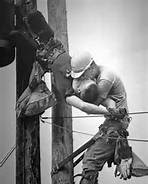
It reminded me of an even more dramatic photograph of someone saving another person's life more than three decades ago. Rocco Morabito of the Jacksonville (Fla.) Journal got the dramatic picture of an electrical lineman giving mouth to mouth resuscitation to a fellow lineman. It won the 1976 Pulitzer Prize for photography.
Monday, February 10, 2014
What Critics Wrote About the Beatles

Newsweek: "Visually they are a nightmare, tight, dandified Edwardian-Beatnik suits and great pudding bowls of hair. Musically they are a near disaster, guitars and drums slamming out a merciless beat that does away with secondary rhythms, harmony and melody. Their lyrics (punctuated by nutty shouts of "yeah, yeah, yeah") are a catastrophe, a preposterous farrago of Valentine-card romantic sentiments…."
Boston Globe: "They … sound like a group of disorganized amateurs whose voices seem to be fighting each other rather than blending…."
Chicago Tribune: "We think the three B's of music — Bach, Beethoven and Brahms — have nothing really to fear from the Beatles, even though Presley wired them his blessing last night."
Friday, February 7, 2014
Facebook Turns 10
Facebook is celebrating its 10th anniversary this week. A few numbers about the social networking site that I found amazing:
1.26 billion: Number of people who use Facebook. If the site was a country, it would be the second largest behind only China.
10 billion: Number of messages sent between users every day.
150 billion. Number of photos uploaded to Facebook by September 2013.
1.3 trillion: Number of times the "like" button was pushed between its launch in February 2009 and September 2012.
Thursday, January 30, 2014
Cost of Super Bowl ads continue to rise
An interesting story in Business Week explains how and why the price of Super Bowl commercials has risen so much since the first game in 1967. One of the reasons that the game commands ever-increasing prices from advertisers is that viewers don't change the channel when a commercial break comes on. The audience levels for advertisements are higher than for the on-field action.
And how much is a 30-second advertisement at this year's Super Bowl expected to cost? A cool $4 million.
(Thanks to Max Massey for pointing out the Business Week story.)
And how much is a 30-second advertisement at this year's Super Bowl expected to cost? A cool $4 million.
(Thanks to Max Massey for pointing out the Business Week story.)
Tuesday, January 28, 2014
Pete Seeger and TV did not always mix

The obituary of Seeger in the New York Times tells how "Hootenanny," a show on ABC that capitalized on the 1960s folk revival, refused to book Seeger because of his political views. In protest, other performers, including Bob Dylan and Joan Baez, refused to appear on the show. "Hootenanny" officials agreed to put Seeger on the show if he signed a loyalty oath but he refused. In 1967, Seeger taped, "Waist Deep in the Big Muddy," a song he wrote protesting the Vietnam War, for the "Smothers Brothers Comedy Hour." However, the song was cut before the show was broadcast. The Smothers Brothers protested the censorship and Seeger later was invited to appear on the show.
As times changed, Seeger returned to television more and more, including a memorable appearance on "Sesame Street." But his early problems with network executives are a reminder of how commercial television too often avoids even the hint of controversy.
Sunday, January 12, 2014
Television's best still on Sunday

The question is why, during an era when TV shows can be watched anytime, do the networks continue to put their best shows on Sundays. According to the story, television programmers put shows on Sunday to signal to audiences that the show is big. They also say that a glut of competition on this evening makes the programming they put there look more attractive by comparison.
It doesn't make sense to me, but of course, I'm not a television programmer. I just know that Sunday night is one of the few times of the week that I watch anything other than news and sports. Tonight I'll be tuned into "60 Minutes," "Downtown Abbey," and maybe a bit of the "Golden Globe Awards."
Subscribe to:
Posts (Atom)