Eugene J. Polley, the man who invented the wireless remote control and changed the way we watched television, died last week.
Polley was an engineer at Zenith when the company was one of the leading TV manufacturers. In 1950 the company developed a remote control that attached to the set by a cord. Five years later, Polley came up with the idea of a wireless device that sent light beams to receptors on the set to change channels and turn the set on and off.
With a price tag of $100, the Flash-Matic, as it was known, initially was a luxury device for most consumers. And since there were only three TV networks, there was no great need for the luxury. But with the explosion of cable channels starting in the 1980s, the remote soon became ubiquitous. We have Eugene Polley to thank for that.
Sunday, May 27, 2012
Friday, May 18, 2012
Penn State wins national championship
Penn State's College of Communications won its first-ever national championship in the overall intercollegiate writing-broadcasting-photojournalism-multimedia standings in the Hearst Journalism Awards Program.
Penn State finished first in writing; fourth in photojournalism; seventh in multimedia; and eighth in broadcasting. The college captured seven individual top-10 student finishes in writing; two top-10 individual finishes in photojournalism; one top-10 individual finish in radio; and one individual top-10 finish in multimedia.
The annual Hearst Journalism Awards Program in writing, broadcasting, photojournalism and multimedia is open to students from the country’s 108 nationally accredited mass communication programs. Now in its 52nd year, the competion draws more than 1,000 student entries each year.
Congratulations to all the talented students who made this a historic year for the college.
Penn State finished first in writing; fourth in photojournalism; seventh in multimedia; and eighth in broadcasting. The college captured seven individual top-10 student finishes in writing; two top-10 individual finishes in photojournalism; one top-10 individual finish in radio; and one individual top-10 finish in multimedia.
The annual Hearst Journalism Awards Program in writing, broadcasting, photojournalism and multimedia is open to students from the country’s 108 nationally accredited mass communication programs. Now in its 52nd year, the competion draws more than 1,000 student entries each year.
Congratulations to all the talented students who made this a historic year for the college.
Thursday, May 17, 2012
Pictorial correspondents of the Civil War

Sunday, April 29, 2012
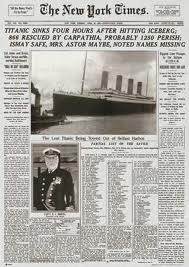
The Times and the Titanic
Wednesday, April 18, 2012
Daily Collegian Goes Old Style
The Daily Collegian, Penn State's student newspaper, celebrated its 125th anniversary today by returning to its roots. In a historic nod to its predecessor, The Free Lance, which was born on April 18, 1887, the Daily Collegian copied the newspaper's old look. The nameplate, headline fonts, column rules and other design elements mimic the The Freelance. It's a clever way for the Daily Collegian to remember where it came from. Kudos to editor Lexi Belculfine and the staff.
Monday, April 16, 2012
Sara Ganim wins Pulitzer Prize
Congratulations to Penn State journalism graduate Sara Ganim and the Patriot-News for winning the Pulitzer Prize for local reporting. Sara, who is just 24 years old, and her colleagues were honored for their outstanding reporting of the Jerry Sandusky sex abuse scandal. The Department of Journalism is extraordinarily proud of Sara.
Another pat on the back to the Philadelphia Inquirer for winning the Pulitzer Prize for public service for its series on the pervasive violence in the city's schools. During a year in which the newspaper has gone through so much ownership turmoil, it's great to see the Inquirer recognized.
Another pat on the back to the Philadelphia Inquirer for winning the Pulitzer Prize for public service for its series on the pervasive violence in the city's schools. During a year in which the newspaper has gone through so much ownership turmoil, it's great to see the Inquirer recognized.
Monday, April 2, 2012
An April Fool's Joke to Remember

The prank was the brainchild of PainePR, a public relations firm. The advertisements cost $300,000 but generated an estimated $25 million in publicity for Taco Bell. The White House even got in on the joke. The same day press secretary Mike McCurry told reporters that as part of its ongoing privatization efforts, "Ford Motor Co. is joining today in an effort to refurbish the Lincoln Memorial. It will be the Lincoln Mercury Memorial."
Subscribe to:
Posts (Atom)