Sunday, August 31, 2014
A reminder of the media's history
The Poynter Institute's "Today in Media History" site is a good place to be reminded of all that has happened in the past. David Shedden discusses historic events and provides news accounts of the events. Some things -- like Hurricane Katrina -- are well know, while others -- like Ann Franklin becoming one of the first women newspaper publishers -- are more trivial. But they are all noteworthy for anyone interested in media history.
Friday, June 6, 2014
On D-Day anniversary, recalling Ernie Pyle
On this 70th anniversary of D Day, it is only right to remember the work of correspondent Ernie Pyle. Pyle wrote several columns from Normandy. In "The Horrible Waste of War." Pyle wrote: "I walked for a mile and a half along the water's edge of our many-miled invasion beach. You wanted walk slowly, for the detail on that beach was infinite."
Tuesday, May 6, 2014
A nod to the classroom where things began

Monday, May 5, 2014
Correspondents finally recogize Harry McAlpin
Pioneering black journalist Harry McAlpin got some long overdue recognition at the White House Correspondents' Association dinner on Saturday night. McAlpin, a reporter for the Chicago Defender, covered the administrations of Franklin Roosevelt and Harry Truman, but the association refused membership to blacks. That injustice was finally corrected this year as McAlpin was admitted posthumously and a scholarship was started in his name.
Tuesday, April 29, 2014
Humans of New York and Walker Evans

Xinyu Du draws some interesting parallels between the Humans of New York portraits and the work of the great Depression-era photographer Walker Evans. As she rightly notes, Humans of New York focuses on ordinary people, just as the portraits of Evans did. I'm sure that Short would be thrilled to be mentioned in the same breath as Evans.
Friday, April 25, 2014
Quote of the Day
The new Times Insider feature in the New York Times puts readers behind the scenes at the one of the country's most respected news organizations. A recent story explained how the newspaper selects its long-running "Quote of the Day." The quote has been a feature of the Times since 1950.
Monday, April 7, 2014
On Internet Fragments, Ugh
Here's an interesting article about Internet slang that Sarah Olah sent me. Writer Teddy Wayne calls the single words or incomplete sentences ("This," "Preach," "Ugh") that often accompany links or photos on the Internet "fragments." And, he notes, they "are indicative of how quickly we pass judgment while on the Internet
without investigating an issue too deeply. We share articles and videos
that conform to our prejudices but rarely seek our opposing views, and hardly ever link to them unless it’s to mock them." It's an excellent point that we would all do well to remember.
Saturday, March 15, 2014
Clever Nod to the Past


Sunday, February 23, 2014
Who Do You Dance For?

Friday, February 21, 2014
Kiss of Life redux
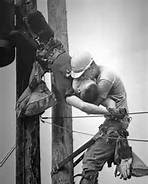
It reminded me of an even more dramatic photograph of someone saving another person's life more than three decades ago. Rocco Morabito of the Jacksonville (Fla.) Journal got the dramatic picture of an electrical lineman giving mouth to mouth resuscitation to a fellow lineman. It won the 1976 Pulitzer Prize for photography.
Monday, February 10, 2014
What Critics Wrote About the Beatles

Newsweek: "Visually they are a nightmare, tight, dandified Edwardian-Beatnik suits and great pudding bowls of hair. Musically they are a near disaster, guitars and drums slamming out a merciless beat that does away with secondary rhythms, harmony and melody. Their lyrics (punctuated by nutty shouts of "yeah, yeah, yeah") are a catastrophe, a preposterous farrago of Valentine-card romantic sentiments…."
Boston Globe: "They … sound like a group of disorganized amateurs whose voices seem to be fighting each other rather than blending…."
Chicago Tribune: "We think the three B's of music — Bach, Beethoven and Brahms — have nothing really to fear from the Beatles, even though Presley wired them his blessing last night."
Friday, February 7, 2014
Facebook Turns 10
Facebook is celebrating its 10th anniversary this week. A few numbers about the social networking site that I found amazing:
1.26 billion: Number of people who use Facebook. If the site was a country, it would be the second largest behind only China.
10 billion: Number of messages sent between users every day.
150 billion. Number of photos uploaded to Facebook by September 2013.
1.3 trillion: Number of times the "like" button was pushed between its launch in February 2009 and September 2012.
1.26 billion: Number of people who use Facebook. If the site was a country, it would be the second largest behind only China.
10 billion: Number of messages sent between users every day.
150 billion. Number of photos uploaded to Facebook by September 2013.
1.3 trillion: Number of times the "like" button was pushed between its launch in February 2009 and September 2012.
Thursday, January 30, 2014
Cost of Super Bowl ads continue to rise
An interesting story in Business Week explains how and why the price of Super Bowl commercials has risen so much since the first game in 1967. One of the reasons that the game commands ever-increasing prices from advertisers is that viewers don't change the channel when a commercial break comes on. The audience levels for advertisements are higher than for the on-field action.
And how much is a 30-second advertisement at this year's Super Bowl expected to cost? A cool $4 million.
(Thanks to Max Massey for pointing out the Business Week story.)
And how much is a 30-second advertisement at this year's Super Bowl expected to cost? A cool $4 million.
(Thanks to Max Massey for pointing out the Business Week story.)
Tuesday, January 28, 2014
Pete Seeger and TV did not always mix

The obituary of Seeger in the New York Times tells how "Hootenanny," a show on ABC that capitalized on the 1960s folk revival, refused to book Seeger because of his political views. In protest, other performers, including Bob Dylan and Joan Baez, refused to appear on the show. "Hootenanny" officials agreed to put Seeger on the show if he signed a loyalty oath but he refused. In 1967, Seeger taped, "Waist Deep in the Big Muddy," a song he wrote protesting the Vietnam War, for the "Smothers Brothers Comedy Hour." However, the song was cut before the show was broadcast. The Smothers Brothers protested the censorship and Seeger later was invited to appear on the show.
As times changed, Seeger returned to television more and more, including a memorable appearance on "Sesame Street." But his early problems with network executives are a reminder of how commercial television too often avoids even the hint of controversy.
Sunday, January 12, 2014
Television's best still on Sunday

The question is why, during an era when TV shows can be watched anytime, do the networks continue to put their best shows on Sundays. According to the story, television programmers put shows on Sunday to signal to audiences that the show is big. They also say that a glut of competition on this evening makes the programming they put there look more attractive by comparison.
It doesn't make sense to me, but of course, I'm not a television programmer. I just know that Sunday night is one of the few times of the week that I watch anything other than news and sports. Tonight I'll be tuned into "60 Minutes," "Downtown Abbey," and maybe a bit of the "Golden Globe Awards."
Thursday, January 9, 2014
Facebook and history

Wednesday, December 25, 2013
The most beloved newspaper editorial
The Centre Daily Times today reprinted, "Yes, Virginia, There is a Santa Claus," continuing a tradition that many newspapers across the country have been doing for decades. Published in the New York Sun on September 21, 1897, it is perhaps the most beloved American newspaper editorial. "Yes, Virginia" has been translated in 20 languages and even set to music. A good deal has been written about why it resonates more than 100 years later. But for now, it's enough just to remember the famous lines:
"Yes, Virginia, there is a Santa Claus. He exists as certainly as love and generosity and devotion exists, and you know that they abound and give to your life its highest beauty and joy. Alas! how dreary would be the world if there were no Santa Claus! It would be as dreary as if there were no Virginias."
"Yes, Virginia, there is a Santa Claus. He exists as certainly as love and generosity and devotion exists, and you know that they abound and give to your life its highest beauty and joy. Alas! how dreary would be the world if there were no Santa Claus! It would be as dreary as if there were no Virginias."
Friday, November 22, 2013
Remembering coverage of JFK's assassination
CBS News is recognizing the 50th anniversary of President John F. Kennedy's assassination by live streaming its coverage of the event. It's one of most simplest but most effective ways I've seen of remembering how the dominant TV network of that time, anchored by Walter Cronkite, reported the shattering news.
Sunday, November 17, 2013
Auburn's Rural Studio making a difference

One of the Rural Studio's most interesting projects is the $20,000 house. According to studio's web site:
"The $20k House is an ongoing research project at the Rural Studio that seeks to address the pressing need for decent and affordable housing in Hale County, Alabama. Nearly 30% of individuals in Hale County live in poverty. Due to the lack of conventional credit for people with this level of income, and insufficient knowledge about alternative sources of funding, trailers offer the only chance for home ownership . . . The $20k house project intends to produce a model home that could be reproduced on a large scale, and thereby become a viable alternative to the trailer in this area. The challenge is to build a house for $20,000, ten to twelve thousand of which will go towards materials and the remainder on contracted labor. Once a truly successful model has been designed, the aim is to sell the houses in conjunction with the “502 Direct Loan” provided by the Rural Housing Service."
Here is a recent story about the Rural Studio with photos of its work.
Saturday, November 2, 2013
101 Objects that made America
The November issue of Smithsonian magazine features what the magazine calls the "101 Objects that Made America." The objects were selected from the 137 million artifacts in the museum's collection. Like any project of this kind, the list includes both the obvious and not-so obvious. The former include the Bald Eagle, a gold nugget, and the Model T. The latter include Pueblo jars, a suitcase from Japanese internment, and R2-D2.
I found all the objects fascinating, but here are seventeen that especially resonated with me:
I found all the objects fascinating, but here are seventeen that especially resonated with me:
- Neil Armstrong's Spacesuit
- Lewis and Clark's compass
- Remington typewriter
- Louis Armstrong's trumpet
- Justice O'Connor's robe
- Lincoln's top hat
- Appomattox table and chairs
- Greensboro lunch counter
- Levi's jeans
- Morse telegraph
- Stagecoach
- Negro League baseball
- Teddy bear
- M*A*S*H sign
- Geronimo portrait
- Thomas Jefferson's desk
- Star-Spangled Banner
Subscribe to:
Posts (Atom)